For the nerds 🤓
The science of getting blasted
Cool Bursts runs on real cryogenics — the same physics that freezes food, preserves lab samples, and (in much bigger tanks) chills rocket hardware. Here's the whole trick, step by step. No hand-waving.
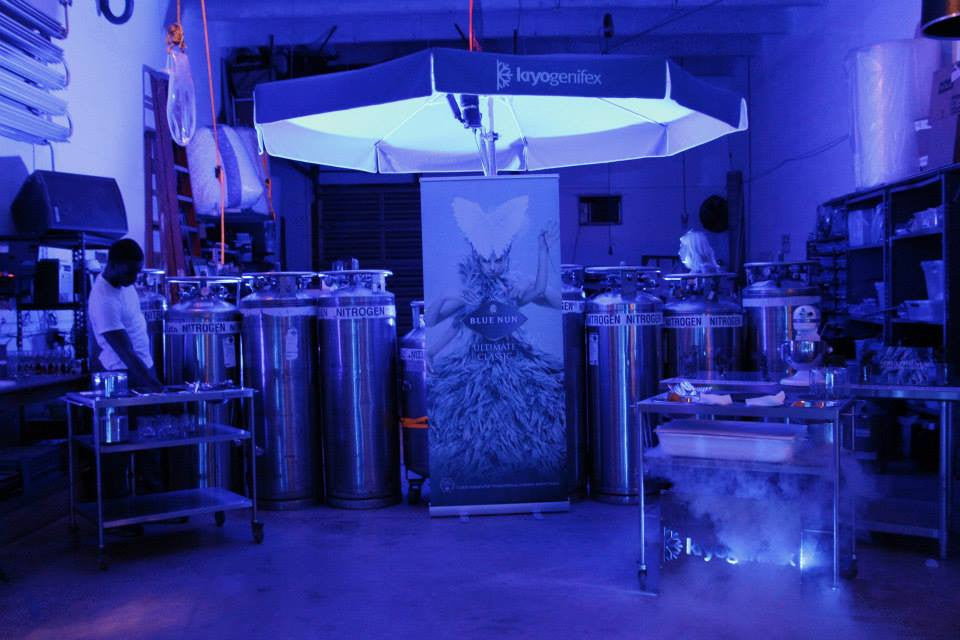
- Step 1 — Store a gas as a super-cold liquidSqueeze a gas hard enough and chill it far enough and it turns liquid, taking up a tiny fraction of the space. Liquid nitrogen sits at −196°C (−321°F). Liquid CO₂ is the “warm” one — it flashes out at about −78°C (−109°F). Kryogenifex systems store their cryo in insulated vacuum bottles called dewars (that's them in the photo below).
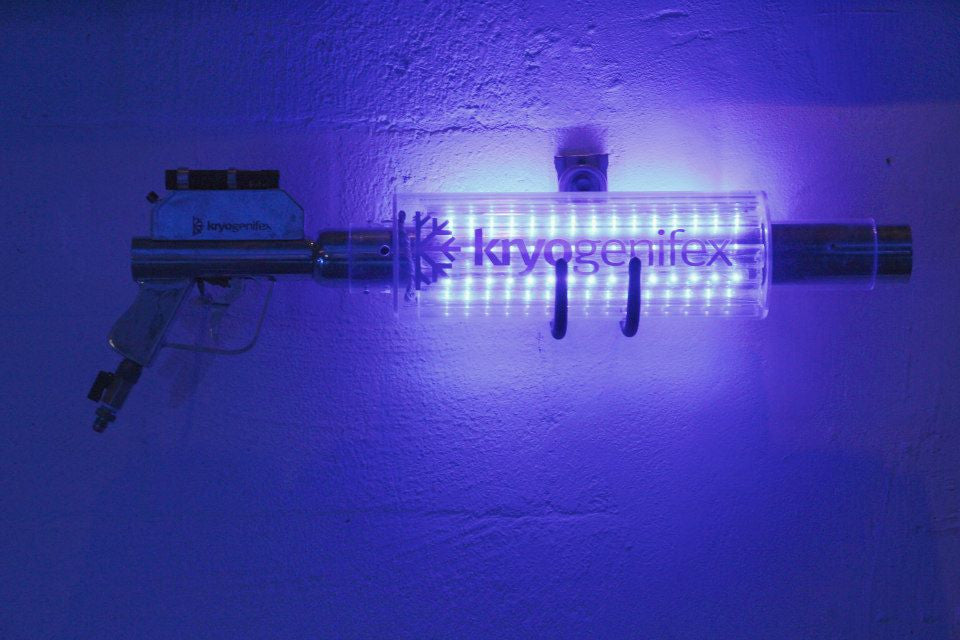
- Step 2 — Open the valve on cueThe jets are mounted on the lighting truss and wired to the DJ's show control. Hit the cue and a valve snaps open for a short, timed burst — seconds, not minutes.
- Step 3 — Expansion does the workThe instant the liquid escapes, it boils into gas and expands violently. Liquid nitrogen expands about 694 times its liquid volume as it warms to room temperature. That expansion is the whoosh you feel — and it drags a huge amount of heat out of the air around it.
- Step 4 — The white cloud is… the roomHere's the part most people get wrong: the white plume isn't the gas itself (nitrogen and CO₂ are invisible). The stream is so cold that it instantly freezes the water vapor already floating in the air into a cloud of microscopic ice crystals. You're looking at frozen humidity, lit up by the stage lights.
- Step 5 — Gone in secondsThe crystals are tiny and the room is (relatively) warm, so they melt and evaporate almost immediately. No liquid, no film, nothing left behind. The cold air mixes in, the floor feels degrees cooler, and by the next chorus there's no trace it happened — except the videos.
Nerd numbers
Myth vs fact
“It's a smoke machine.”
No fluid is heated or burned. Smoke/fog machines vaporize oil- or glycol-based fluid that lingers and leaves residue. A Cool Burst is a phase change plus frozen air moisture — that's why it vanishes in seconds and leaves nothing behind.
It's colder than your freezer — briefly
The stream leaves the nozzle at cryogenic temperatures and warms rapidly as it mixes with room air over distance. By the time it washes over the crowd from the truss, it's a rush of cold air, not a freeze ray. Distance + mixing + short bursts are the whole design.
“It'll set off the fire alarm.”
There's no smoke particulate and nothing burning — CO₂/cryo jets are known in the effects industry for not triggering smoke alarms the way fog does. (Your venue still gets told about the effect in advance — that's part of the pro setup.)
Humidity makes it better
A hot, packed, slightly humid gym is perfect plume weather: more water vapor in the air = a denser, whiter cloud. The worse the dance-floor heat problem, the better Cool Bursts looks. Physics is on your side.
Sources: Kryogenifex (kryogenifex.com) and its Wikipedia summary; NIH Research Festival cryogen safety abstract (LN₂ boiling point and 1:694 expansion); CryoFX CO₂ jet guides (nozzle temperature, frozen-humidity plume, 2–4 second dispersal, no residue). Full safety handling is on the Safety page.
A cryo jet system demo (CryoFX) — watch how fast the plume appears and disappears.
Convinced? Curious? Both work.
Bring the science fair to prom night. Check your school's dance date — and if your physics teacher wants to talk phase changes, we respect it.
Check your date ❄